10 March 2009
03 March 2009
Artists / Images To Emulate

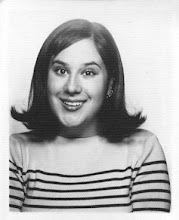
This picture is from a list of fake album covers somewhere on the internet. I can't remember how I came across said list, I just remember liking the angle and tone of this image very much so I saved it to my desktop. The list did not give credit as to who took the photograph; I assume it is a stock photograph. But just in case, here's my disclaimer: ***I did not take this picture and if the person who did is reading this and can prove that it is your original image, I will give you due credit on this 'blog.***

Photo courtesy of Brigitte Lacombe and Glamour magazine
Glamour magazine just did a piece where current actresses are dressed/styled as traiblazing American icons. I really like it and think I might want to try something like this for a self-portrait wherin I emulate the women who have been influential to me. The photos are somewhat Cindy Sherman-ish, but I feel the tone of this piece (other than being a fashion spread) is positive, whereas as much as I truly do like Cindy Sherman's beautiful Film Stills series, I view hers as being a negative connotation of female stereotypes.

I like Marc Chagall's self-portrait, Me and My Village (1911), because he is just a part of it; he does not inhabit the entire compostition. His physical body is just a part of what makes up his entire self. His surroundings in the painting, his village, are important because they shape who he is. It's a symbiotic relationship becaues he is as much to the village and the villages is to him. In emulating this painting, I'd like place myself among my surroundings but not be the main focus, but rather just an object that makes thats is part of the whole scene.


Melissa Auf Der Maur, one time bassist for Hole and Smashing Pumpkins, is also a photographer and often uses herself as subject. Some of her images come across as navel-gazing, but some really strike me compostion-wise, color-wise, and tone-wise, such as the shots of her apartment that were featured in Nylon magazine. In her series The Kids Are Alright, she documented her life on tour. The above photo illustrates how she is "on the clock" and with her "customers", i.e. fans. I'd like to try something like this with myself at work with my daily customers, but Starbucks is pretty strict about taking pictures in the cafes. We'll see what I can do....
25 February 2009
When the going gets tough...
Sometimes we need a swift kick in the pants and a bit of encouragement. We are not quitters! Quitters did not build this nation. Quitters did not sustain this country. We, as a nation, have seen harder times and muddled through, and we will do it again.
By DAVID ESPO
AP Special Correspondent
WASHINGTON – To a nation reeling from recession and facing long-festering problems, President Barack Obama has a simple reminder: "We are not quitters."
Whatever the problems, the new president promised in the first prime-time speech of his term, "We will rebuild, we will recover and the United States of America will emerge stronger than before."
Standing before a joint session of Congress on Tuesday night, Obama optimistically sketched an agenda that began with jobs, then broadened quickly to include a stable credit system, better schools, health care reform, reliable domestic sources of energy and an end to the war in Iraq. Specifics will follow, he said, although he conceded more billions may be necessary to stabilize the banking system.
The president drew loud cheers as he made his way down the center aisle, again when he stood, alone, at the podium to speak, and several more times in an address delivered in a hall packed with lawmakers, members of his administration, Supreme Court justices and diplomats.
Humorous and poignant moments took their turns on a night when virtually the entire government gathered under one heavily secured roof.
As when Obama explained his decision to have Vice President Joe Biden oversee implementation of his stimulus plan by saying, "Nobody messes with Joe."
Or when he urged lawmakers to pass education legislation named in part for Massachusetts' Democratic Sen. Edward M. Kennedy, battling brain cancer. The 77-year-old lawmaker "has never stopped asking what he can do for his country," Obama said, rephrasing an enduring line from President John F. Kennedy's 1960 inaugural address.
Biden followed up Wednesday morning by serving notice that the administration would be poised to take back unused stimulus money if governors refused to spend it.
Another option, he spelled out on ABC's "Good Morning America," would be to "use the television and the radio and the media to embarrass them for not doing what they're supposed to do."
Biden said the money "cannot be squandered" and warned that states will be held accountable for what they do with the money.
Little more than one month into the president's term, Obama's speech followed congressional passage of an $787 billion stimulus bill, coincided with pending proposals to stem an epidemic of mortgage foreclosures and served as prelude to a budget Obama pledged will cut projected deficits in half by the end of his term.
The new president submits his tax and spending plans to Congress on Thursday.
With solid Democratic majorities in both houses, Obama can count on a reliable base of support as he pushes his agenda. But his drive for bipartisanship depends in part on his standing in the polls — strong so far — and his speech was aimed at lawmakers as well as the viewing public.
"What is required now is for this country to pull together, confront boldly the challenges we face, and take responsibility for our future once more," he said.
Republicans said they were ready to work with Obama and his Democratic allies in Congress — up to a point.
"Where we agree, Republicans must be the president's strongest partners. And where we disagree, Republicans have a responsibility to be candid and offer better ideas for a path forward," said Louisiana Gov. Bobby Jindal, tapped by party leaders to deliver the GOP response.
Jindal, the first Indian-American governor in history, also took the opportunity to pledge to voters his party would try to regain their trust after an election in which Democrats not only won, elevating the first African-American to the White House, but strengthened their majorities in Congress.
"We will do so by standing up for the principles that we share," he said.
The president seemed to do a little political positioning of his own.
He said the recently passed stimulus legislation was designed to "put people back to work and put money in their pockets. Not because I believe in bigger government — I don't." And despite what his critics claim, he said, no family with an income of less than $250,000 would face higher taxes because of his plan.
While Obama's speech was short on specifics, his remarks hinted at legislative battles ahead with Democrats as well as Republicans in Congress.
He said he had already identified $2 trillion in savings to be achieved over the next decade, adding: "We will end education programs that don't work and end direct payments to large agribusinesses that don't need them. We'll eliminate no-bid contracts that have wasted billions in Iraq."
He also pledged to "root out the waste, fraud and abuse in our Medicare program that doesn't make our seniors any healthier," an apparent reference to the subsidies the government pays to private insurance companies offering an alternative to traditional Medicare under a program long nourished by Republicans.
© 2009 The Associated Press. All rights reserved.
24 February 2009
23 February 2009
Interesting...
Our photographs can have a bigger impact than we might expect, long after we click the shutter.
On Oct. 7, 1999, a young photographer named Jonathan Saunders hauled his camera gear across town to the Lipstick Building in Midtown Manhattan for one of his first portrait assignments.
Fortune had selected Mr. Saunders to photograph a middle-aged investor, for an article discussing the investor’s pioneering approach to the markets. “Don’t be on the opposite side of a 100,000-share trade,” the investor said in the accompanying article, “because anyone trading 100,000 shares knows more than you do.”

On Oct. 7, 1999, a young photographer named Jonathan Saunders hauled his camera gear across town to the Lipstick Building in Midtown Manhattan for one of his first portrait assignments.
Fortune had selected Mr. Saunders to photograph a middle-aged investor, for an article discussing the investor’s pioneering approach to the markets. “Don’t be on the opposite side of a 100,000-share trade,” the investor said in the accompanying article, “because anyone trading 100,000 shares knows more than you do.”
Ten years later, it turned out it was the investor himself who knew either more, or less, depending on your perspective, than just about anyone in the markets.
The investor was Bernard L. Madoff, and the 80 or so frames that Mr. Saunders took during their 15-minute session a decade ago are suddenly in demand.
“There have been some photo shoots of him, but a lot were very old,” said Robert Priest, the design director of Condé Nast Portfolio, which put an image from Mr. Saunders’s shoot on its March cover. “We felt this one represented Mr. Madoff at his prime.”
Mr. Saunders had largely forgotten about the session when a photo editor from The Wall Street Journal called him in mid-December, asking for a copy of a photo of Mr. Madoff.
“I was like, that’s kind of weird, that’s a 10-year-old portrait I did of a guy I don’t remember, and they were very eager to pay my minimum and get it in the paper,” Mr. Saunders said. “Then, within five or six hours, there was an avalanche of Google news alerts about it, and I was like, oh. I’d better make better scans.”
Photos from the shoot have run in The Journal and The Daily News, and Mr. Saunders is fielding requests from television stations and the international media.
The images from the session are all rather one-note, Mr. Saunders said. “Most of them, he just looks kind of bored. Some he’s looking very serious,” he said. On the trading floor, he did get Mr. Madoff to crack a smile.
But for its cover, Portfolio went with one of Mr. Madoff standing in a hallway, looking serene and self-assured.
“The people who invested with him seemed to be completely confident in his management of the money,” Mr. Priest said. “I think that expression shows there. He seems like a very strong personality, and yet with warm eyes. This expression sort of said what those people saw in him.”One more about Fairey
 Just in case you are keeping track...
David Hauslaib from Jossip has this to say:
It took the Associated Press more than seven months to find out artist Shepard Fairey created his Obama "Hope" poster based on one of the news consortium's photos. It also took Shepard Fairey actually telling the AP that he used their photo for them to notice and get all lawsuit-happy. Because, yep, the AP is now ready to sue him him for copyright infringement. (And he's also ready to sue them!! Their attorneys are meeting to discuss the matter.) But what if the AP doesn't hold the exclusive image of Obama posed in such a way? What if there is a Creative Commons version of a terribly similar photo that allows the "sharing" and "remixing" of the photo?
Then either: 1) Fairey is foolish for acknowledging the AP as his inspiration; 2) He could've easily fallen back on the explanation that he used a legitimately licensed photo to create his poster, and been off the hook for the whole thing.
Or both.
As the above image demonstrates, a CC-licensed photo that shows Obama in a very similar, nearly indistinguishable pose exists. And there are likely many more out there, if Lessig.org has any say about it. Of course, this photo (above right) in particular carries a license that says anyone who uses the image must credit its author — which Fairey's usage failed to do. Since he snagged the AP's image.


Subscribe to:
Posts (Atom)